
Why We Put a Sauna on the Roof of Our Coworking Space
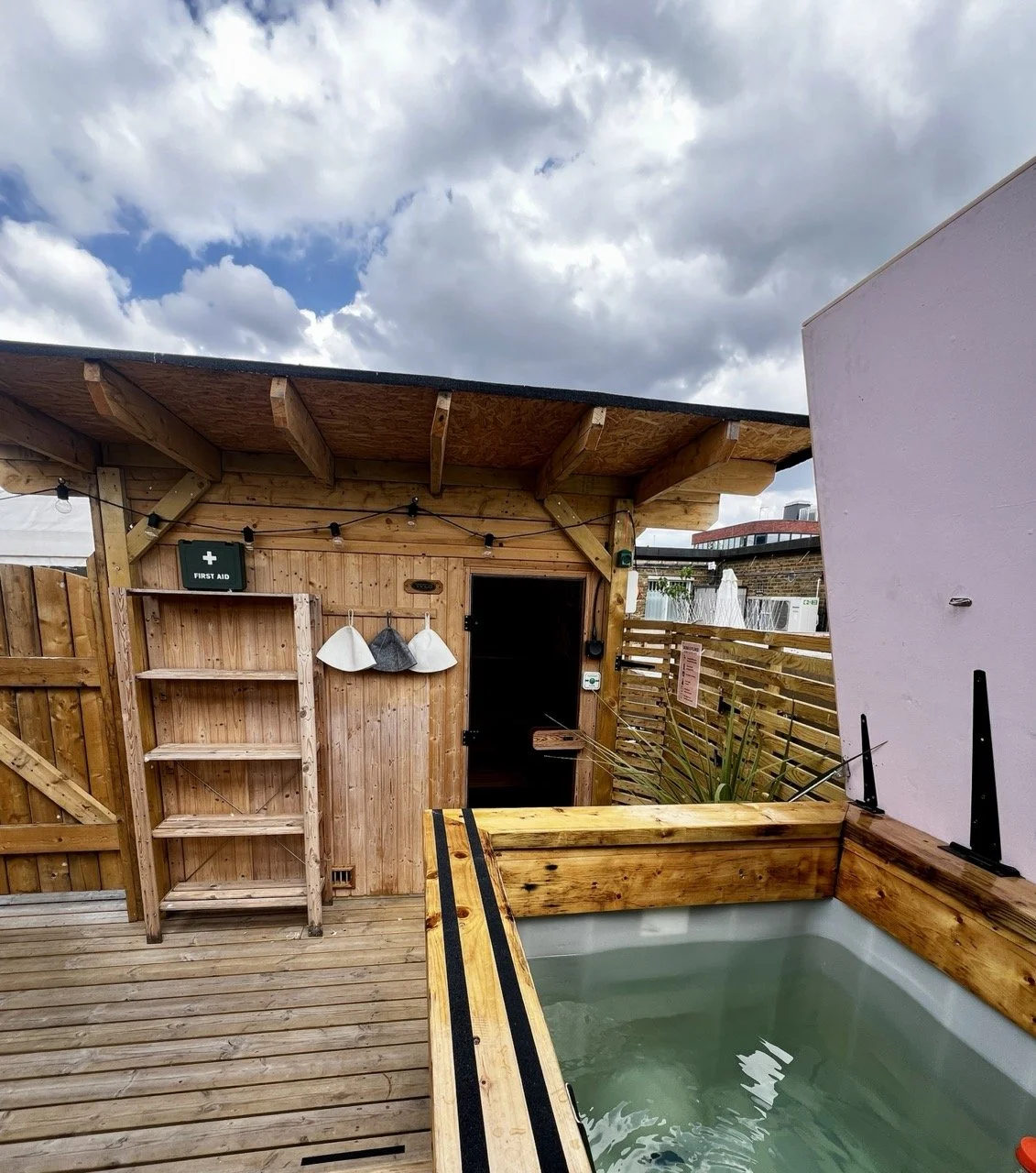
I got into saunas a few years back. Started doing the rounds of the ones dotted across London, and two things happened, one of them I wasn't expecting.
The first one's obvious — you come out feeling incredible. Everyone tells you that.
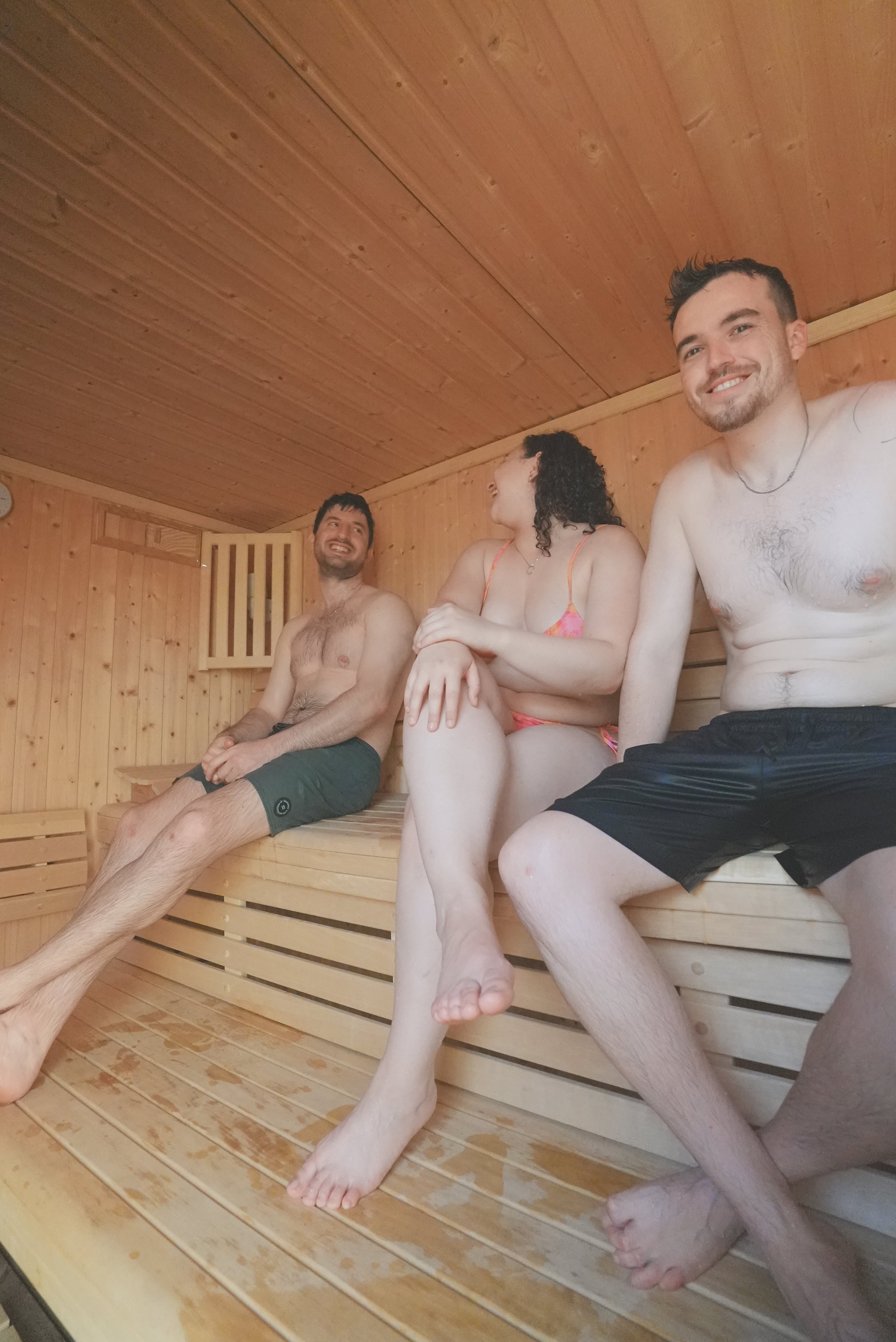
The second one nobody mentions: saunas suck while you're in them. It's hot, you're sweating in places you didn't know you could sweat, and every second feels like it's dragging. So to take your mind off the pain you end up talking to whoever's sitting next to you — not because you're networking, but because talking is the only thing that makes the suffering go faster. Otherwise you're just staring at the sand timer, willing it to be over.
That's the part that actually got me. The discomfort is what builds the community. You suffer together for twenty minutes, and you come out the other side having had a real conversation with a total stranger you'd never have spoken to otherwise.
So I wanted my own. One that wasn't a bus and two tubes away. I knew what it did for me, and I figured if it worked that well on me, it'd work on anyone who came through our doors. So we put one on the roof. Cold plunge next to it. It's in every membership, and all of our clients can use it. I think it should just be part of how you work.
Why I believe this stuff
I think a lot about energy. Not in some floaty, crystals-on-the-windowsill way — I mean the actual physical environment around you is constantly doing something to you, whether you clock it or not, and most people massively underrate how much.
There's a well-known bit of research from the 1980s: hospital patients recovering from the exact same surgery healed faster and needed less pain medication when their room looked out onto trees instead of a brick wall. Same operation, same ward, same nurses. Different view, different recovery. Nobody's fully settled on why, but the effect is real and it's been checked again since.
There's a 2014 study out of the University of Exeter that found people working in offices with plants were 15% more productive than people working in stripped-back, minimalist ones. Other research has tied indoor greenery to real drops in anxiety and tension — we're not talking a couple of percent, some studies put it at over a third. Plants aren't decoration. They're doing something to your nervous system while you sit near them.
That's the kind of thing I mean by energy. Colour, light, air, plants, cleanliness, the people around you — none of it is neutral. It's all doing something to you constantly. We pick colours with actual intention, not necessarily for the coolest pallet but for what that color causes in you when you seat. We fill the place with plants. We use real materials wherever we can.
Call it hippie if you want. I don't think it's controversial. We all already know we work better in a clean room than a messy one, better with fresh air than stale air, better around people who give a shit about us than people who don't. None of that's a stretch. I just think most workspaces don't take it seriously enough to actually build around it.
And you can swap "work" for "live" in every single sentence above. Doesn't change a word of it.
What most office providers get wrong
Most of them are faking it.
Somewhere in a big serviced office company there's a job title with the word "wellbeing" in it, and that person's actual job is to make their boss believe something's being done — not to make the person at the desk feel any better. It's a wellness room nobody uses. A poster about mental health awareness week. A ping pong table that exists because it photographs well for the website, not because anyone's ever played on it.
Call it energywashing. Greenwashing's cousin. All the language of caring, none of the actual intention behind it.
Some of these places genuinely look better than ours, I'll be honest about that. But looking good and being good for the human being sitting in it are two completely different projects, and most operators are only doing the first one. Their intention isn't "how do we make this a good place for someone to spend eight hours of their one life." Their intention is "how do we make this photograph well enough to sell." You can usually tell the difference within about ten minutes of walking in.
Do small business owners actually think about this
Some do. Most don't, not really.
Small business owners are usually close enough to their team that they'll notice when something's clearly wrong. But when they're actually choosing an office, the first two things on the list are location and price. Wellbeing sneaks in sideways, if at all — "is it near the tube," "does it have decent amenities" — but the actual energetic quality of a space, whether it feels alive or feels like nowhere, rarely makes the list at all.
I think that's shifting, slowly. Work is getting more screen-heavy, more always-on, more disconnected from anything physical. People are starting to notice what that costs them when they're spending all day on their screens sat in a chair. I think the businesses who clock this early are going to have an advantage nobody's really talking about yet.
What the sauna has done
Every single member who's used it has told me it's changed something about their day. It's become a genuine reset button — people go up stressed, come back down calm.
It's also built something between people, conversations happen up there that don't happen anywhere else in the building. There's something about being genuinely uncomfortable next to someone that strips out all the small talk.
One member told me he specifically went looking for coworking with a sauna, because as far as he could find, we're the only ones in London who have one. That doesn't happen often. Most people come to us for the usual reasons — location, price, the basics — and find the sauna once they're already here. But once you've built the habit of using it, it's genuinely hard to give up.

What makes the difference
The building does a lot of the work before anyone's even walked through the door. Natural light everywhere. Proper airflow. A big outdoor space, inside stuffed with plants at both locations. Colours we chose with thought behind them. Real materials over plastic and MDF wherever we could get away with it.
But the physical side is only half of it. The other half is how our team treats the people who show up. We talk to our staff about their actual job being to look after the people in the building, not run through a customer service script, but genuinely care whether someone's day is going alright. That's a harder thing to build than a nice room. It also matters more.
If you're choosing between us and somewhere else
Here's the honest version.
Work out where you actually want to be first. Some people will cross London for the sauna alone — but for most people, location has to work before anything else does.
After that, pay attention to how the team treats you. Is it a real person you can talk to, or a "computer says no" situation dressed up in nice branding? A lot of the big corporate operators are absolutely lovely while you're signing the contract and considerably less lovely when you're trying to change it, fix something, or leave. Watch for that gap. It tells you more about a place than any photo on their website ever will. Ask questions like what happens if I need a bigger/smaller/different space mid contract.
I'm not here to convince anyone that wellbeing matters. If you genuinely don't think your surroundings affect how you or your team works, fair enough — that's not who we're building this for. We're for people who already know their environment changes how they function, the same way their house changes how they live.
The bigger idea
What we're trying to do with the Work Well Project is set a different bar for what an office should be — corporate or small business, doesn't matter which. Simple idea underneath it: better environment, better wellbeing. Better wellbeing, better work. Better work, better life. Better life, you probably cook a better dinner too. It's all the same chain.
I know it's true for me. I work better after I've been for a run. I work better after a sauna. I work better when I've looked after my body and mind.That’s not a marketing line. That's just what happens to me, every time, without fail.
I don't think the office is dying. I think it's changing shape. People are going back, and the social side of work is coming back with them. I don't think what makes an office worth going to is going to be the free snacks or a mission statement about being "thrilled to join a dynamic team." I think it's going to come down to whether the people above you actually care about how you're doing, whether the community around you is real rather than performed, and whether the space itself was built for you rather than built to look good in a brochure.
I think the businesses and the people who take that seriously, are the ones who end up with better teams and better results. That's where I think this is heading, and not just for the companies with the budget to make it pretty. For everyone.
If you've been working from home and you're wondering whether this matters
Try this. Set yourself some basic measures for how focused you actually are working from home right now — how often you're picking up your phone, how many genuinely focused hours you get through a day, how you feel by the time you shut the laptop. How you feel after you stop working, can you shut off? Then go and work somewhere else for a week or two and track the exact same things.
See what moves.
Some of it will be the obvious stuff — fewer distractions, better internet, an actual desk instead of the kitchen table. But pay attention to the less obvious bit too. How do you feel when you leave? Can you actually switch off once you're home, or is work still sitting there on the kitchen table with you, waiting? A workspace that's genuinely separate from your house does something for your evenings that's hard to get any other way. You leave work at work. Home gets to just be home again.
That's worth a lot more than people give it credit for.
If you want to see what a workspace built around this actually looks like, we run two locations in North London — Archway, sauna and cold plunge on the roof, and Hornsey, parking.Private offices and coworking, same philosophy running through both. Come and see it before you decide anything.