
Coworking or Private Office: A 15-Year Operator's View
Which one you actually need, written by someone who runs both
Most people who contact us already know what they want. They've thought about it. They're calling about specifics — which location, what's available, how much.
But every so often, someone's properly on the fence. They've outgrown working from home, they're not sure if they're ready for an office, and they want a straight answer.
This is for them. And for anyone who'd benefit from a sharper read on the trade-off than the average coworking blog will give you.
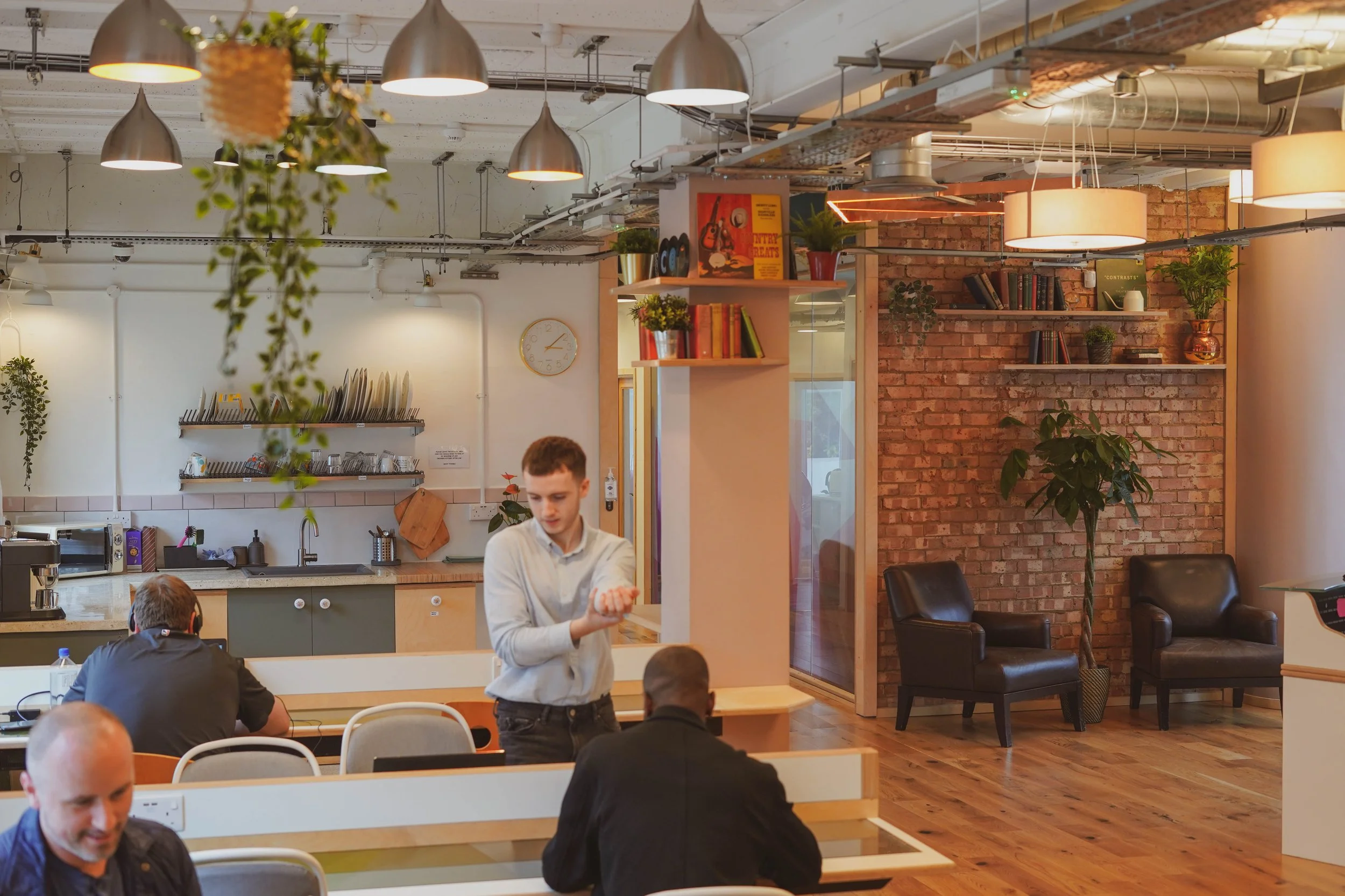
our coworking space at archway
The short answer
If you're hesitating, start with coworking.
Keep your overheads down. Once you know you've got something real — paying clients, predictable income, a team that needs to be together — take the next step. It's right there. You're not deciding between coworking forever or an office forever. You're deciding between coworking now or an office now.
If you're going to make a mistake, make it on the side of going too small. You can always upgrade. You can't easily downgrade.
The most common mistake
Taking on more space than you can afford on the strength of one client.
The freelancers I worry about most are the ones who tell me they've just won "a big contract." Usually it means they've got one client and they're treating that one client as a business. It isn't. A business has multiple income streams. A freelancer with one big contract has a single point of failure dressed up as success.
I've seen this pattern more than once. Someone wins the contract, takes on staff, commits to a 12-month office. Two months in, the contract is pulled and they're vacating immediately. The business never existed in the first place — they just had a client who'd hired them.
If you're going to make a mistake in this decision, make it on the side of going too small. You can always upgrade. You can't easily downgrade.
What doing it right looks like
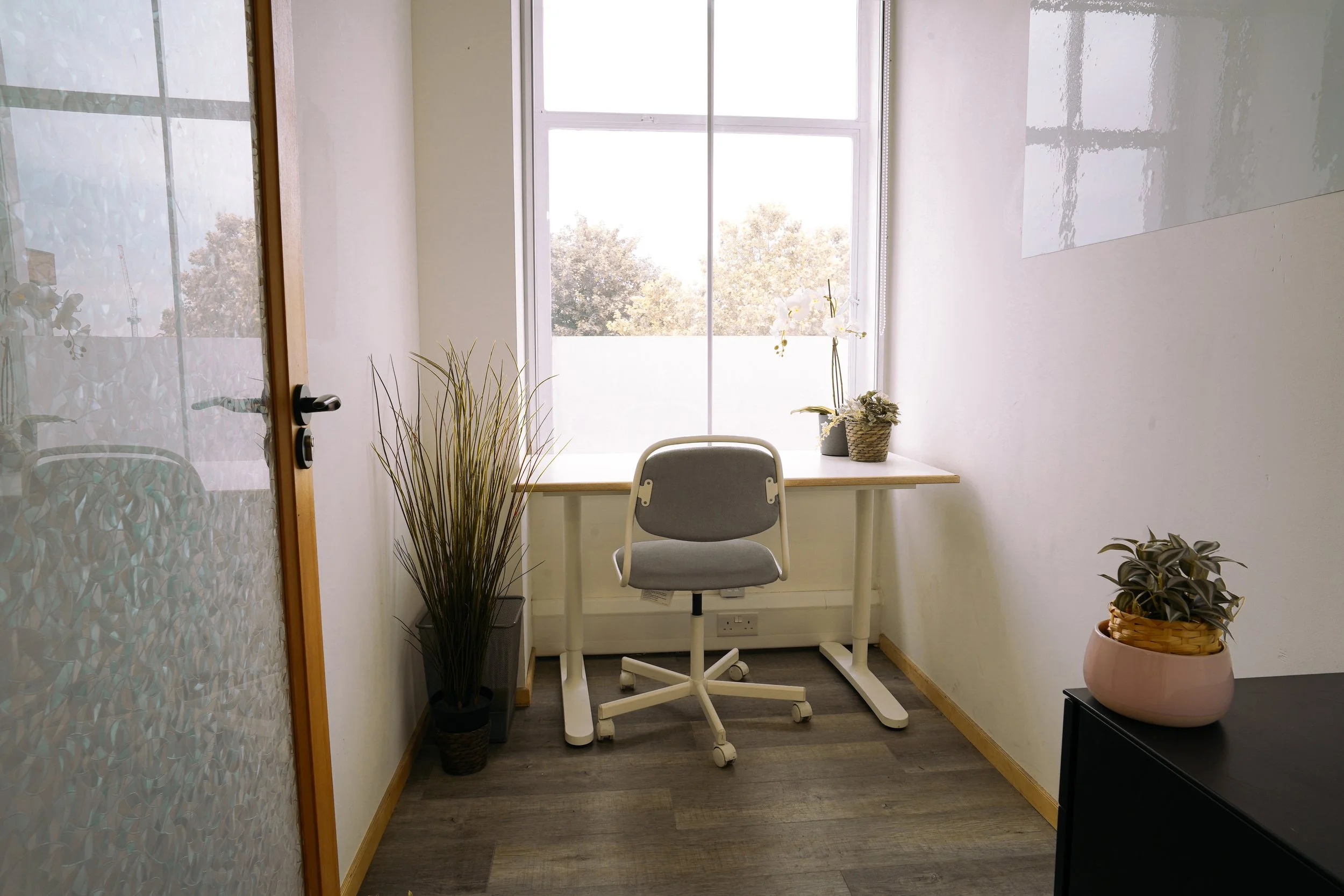
his office before he moved in
One of our long-term members is an accountant. He started with a single coworking day pass, used it a couple of days a week while building his client base. Once he had enough clients, he moved to a dedicated desk. Once he needed to meet clients without strangers around, he moved into one of our offices.
He upgraded only when the business demanded it. He never took on overhead in advance of revenue. He's still here years later.
The pattern is almost always the same with the people who get this right: start small, grow into the next thing, only take on cost when the business is clearly ready. They don't try to "look successful." They become successful, and the space follows.
When coworking stops working
When you've got more than two people.
Coworking is fine for one. It works for two if you both want it. Beyond two, it gets awkward. You can't have real conversations about the business with strangers three feet away. You can't share a screen without leaning into someone else's workspace.
It also doesn't work if your business involves a lot of talking — sales calls, client conversations, recordings, anything where you're on a call for hours. You'll feel constantly like you're being too loud, or you'll live in phone booths all day, which is a worse experience than just having your own room.
Quiet, focused, one-person operation? Coworking is great. Doing lots of calls, or you've got people? You probably need an office.
The working from home question
A lot of people considering both options are coming from working at home.
Some people genuinely thrive working from home. If you're one of them, stay home. Save the money.
But for a lot of people — possibly most — there's a hidden cost to working from home that they're not accounting for. Your house starts to feel like an office. Your evening starts to feel like a continuation of work. Your laptop never properly closes. If you're in a relationship, work becomes a third wheel that's always there, always interrupting. The couple life can't quite thrive because work is sitting in the corner.
People underestimate how much more effective they'd be if they left the house. Not always — some people are genuinely happier at home — but more often than not. People who move from home to coworking or an office often find they're more productive in fewer hours. The work shrinks to fit the time available, and the rest of the day gets to actually be the rest of the day.
What we actually see
Roughly 15% of our coworking members eventually move into a private office with us. The other 85% stay in coworking, sometimes for years.
The two paths aren't the same kind of business journey. Coworking members are often freelancers, consultants, remote workers — people whose businesses don't need to grow into something with a fixed office. Office tenants are usually building something that does — small businesses with employees, growing client bases, equipment, the need to be in one place.
Both are legitimate. Coworking isn't a lesser version of an office. It's a different product for a different kind of working life. Some of our most successful coworking members have been here for years and have no intention of moving up — because they don't need to. They've built businesses that work brilliantly with a desk, an internet connection, and people around them.
What most workspaces get wrong
The whole point of a workspace is to help people get work done.
A good one is clean. Management responds when something breaks. The basics are taken care of, there is a human being to talk to when something goes wrong, The people around you are the kind of people you want to be around. It’s focused on the people working in it rather than people looking at it.
Design matters. Plants matter. Pictures matter. A space should feel nice. But none of that is the point of the business. It's the wrapping, not the product. The wellbeing of the people working there is everything.
The problem is that for a lot of operators, the wrapping has become the first principle. They've made design and vibe and how Instagram-able the place looks into the thing they care about most. They've made saying the right things into the thing they care about most. A lot of operators have built places that look great but don't necessarily support the people working in them.
We work to make money and we work better and live better when we feel good. So whether its your own wellbeing or your staffs wellbeing the only thing that matters is working in a space that enhances you.

summer bbq at bespoke
So which one do you actually want
Hesitating? Coworking. Two or more people? Office. Alone but on calls all day, or you need to leave equipment somewhere? Office. Genuinely thrive at home? Stay there. Doing focused work and don't need privacy? Coworking, indefinitely if it suits you.
The decision isn't really about coworking vs offices. It's about being clear-eyed about what your business actually needs right now — not what you'd like it to need, not what would look impressive, just what's true.
Take less than you can afford. Grow into more when you've earned it. Pick somewhere run by people who care about the operational stuff more than the aesthetic stuff.
That's it.
If you want to see what either looks like in person, we run both at our Archway and Hornsey locations in North London. Day passes available with no commitment. Office viewings are 20 minutes, informal, no pressure. Email, phone, or WhatsApp — we usually respond the same day.