
How much does an office cost in North London? An operator's real numbers (2026)
By Ilan Harari · Last updated 10 October 2026
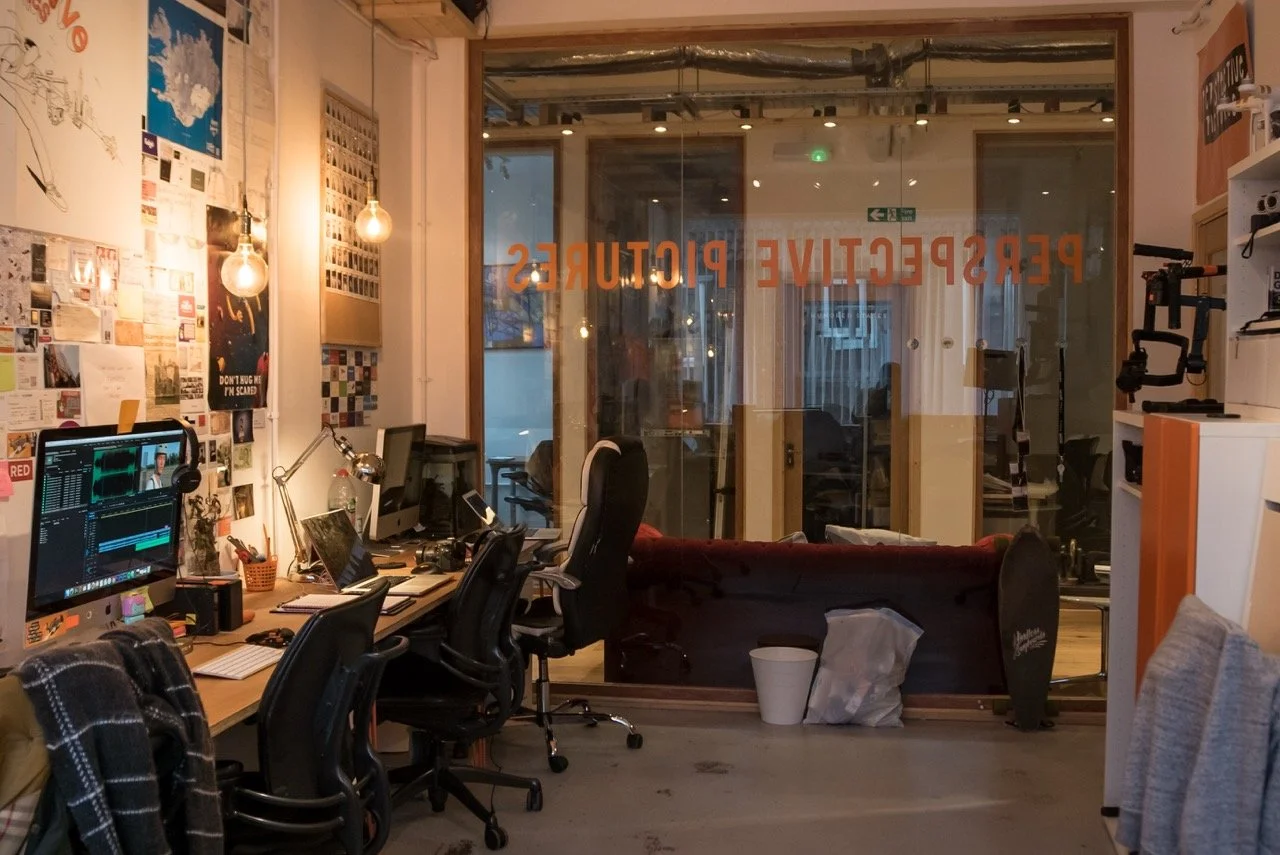
A small private office in North London costs roughly £800–£950 a month for one or two people, £1,100–£1,300 for three or four, and £1,900–£2,200 for five to seven. Those are typical asking prices in N4, N5, N7, N19 and the Camden/Kentish Town fringe in October 2026, and most of them are + VAT. Our own private offices start at £450 a month in Hornsey with no VAT to add, and £595 + VAT in Archway.
Those are averages, and nobody rents an average office. So here's how I'd actually work out a number for you.
First question: what are you doing in there?
When someone rings and asks "how much is an office?", I can't answer straight away. I need to know what they're after first, because different people need very different rooms.
Someone with thirty 3D printers needs a bigger room than someone with a laptop and a desk. Someone who wants to get the maximum number of bodies into an office is shopping for something completely different from someone who wants a bit of storage and one desk. Once we know that, we can actually advise you.
As a rule of thumb, each desk takes about 30 sq ft if you pack people in, and about 40 sq ft if you'd like them to still like each other by Friday.
| Team | Room size | Typical North London asking price | Bespoke Spaces |
|---|---|---|---|
| 1–2 people | 45–80 sq ft | around £940/month (£570–£1,420) | Hornsey from £450, no VAT Archway £595–£695 + VAT |
| 3–4 people | 110–160 sq ft | around £1,260/month (£730–£2,400) | Hornsey £795–£1,100, no VAT |
| 5–7 people | 180–250 sq ft | around £2,200/month (£900–£4,960) | Hornsey from £1,200 Archway £1,895–£2,200 + VAT |
Why the per-desk prices you see online are misleading
Listing sites love a per-desk price. In October 2026 they put the median for Holloway at around £285 a desk and Islington at around £318, against £517 for London as a whole. Those numbers assume the room is crammed to its absolute maximum. A "4-person office" at £300 a desk is really a £1,200 office, and if there are two of you, you're paying £600 a head. Always ask for the price of the room.
What the monthly price covers
With us, the rent on a private office covers:
business rates
electricity and heating (and cooling, in the rooms that have it)
24/7 access
alarm monitoring and CCTV monitoring
building maintenance
communal cleaning
keys and fobs
What costs extra
Internet. Some people need a 20 meg line and some need a gigabit, and those cost very different amounts to provide, so we price it on what you need. Anyone telling you a private office is "all-inclusive" either includes a line that won't suit everyone, or is pricing in a line you're not using.
Your deposit. The first invoice surprises people: it's your first month plus two months' deposit. That's industry standard, and you get the deposit back when you leave.
VAT, depending on the building. Most offices in London are + VAT. Our Hornsey Road offices mostly aren't. Archway is + VAT. If your business can't reclaim VAT, that difference is 20% straight off your bill, so check it on every quote.
The bits you'll use sometimes: meeting rooms (from £20 an hour with us), parking at Hornsey Road (a separate monthly agreement) and storage.
Why one room costs more than another
We grade every room. A is the good stuff, with lots of windows and a proper layout. B has fewer windows or something not quite right. C has no windows and is the least attractive. Price follows the grade, then size, then building.
Here's the bit people don't expect: the worst rooms go fastest. They're cheap, and they're often used for storage or by someone who isn't there much. People are really quick to sign on a good deal for a cheap office, even if it's not as nice, because they care about their bottom line.
People who are going to spend a lot of time in their office are pickier. They take longer to decide, they come back for a second look, and they should. If your criteria is "find me somewhere to put my stuff at the lowest possible price", that's an easy decision. If your criteria is "will I be happy spending nine, ten, twelve, fifteen hours a day in here, depending on what level of workaholic I am?", that's a longer one.
Serviced office or a conventional lease?
I've done this myself. When we signed our first lease, it took four months with solicitors and cost us about £10,000 just to sign. For a new business that was pretty epic. On top of that we'd committed to five years. We took a big risk, and it worked out for us. But it's something you want to be really careful about before you put your name on it.
On paper a lease looks cheaper per square foot. Once you add up everything involved, it generally costs more or less the same as a serviced office, before you've counted the time it eats.
What a conventional lease actually involves:
A minimum of about three years' commitment, usually.
Around £2,000 in solicitor fees just to sign for a small office.
A deposit of one quarter's rent, sometimes two, depending on your trading history.
Three to six months to get it signed.
Your own contracts for internet, electricity and everything else, which tend to be long, onerous and very hard to get out of.
Dilapidations: clauses about "making good" the building when you leave. It's a very large bill at the exit that people don't take into consideration when they sign.
Someone to run it. In the end you need a staff member to manage all of it, or it becomes a big admin cost sitting on you.
If you start a business and discover things aren't working, you're still stuck with all of those contracts, and your landlord is going to own you on the exit.
We've had people come to us after leaving conventional leases because of how much hassle it was. With a serviced office you can move in in a day, and all of that comes off your head.
What to budget beyond the rent
With us it's short: your internet, depending on what you need, and your deposit.
With anyone else, ask these before you move in:
Is internet included? At what speed, and what does a faster line cost?
Are electricity, heating and business rates in the price, or billed on top?
Is the price + VAT?
How much is the deposit, and when do I get it back?
What's the notice period, and is there a break clause?
Is there anything on the way out (redecoration, "reinstatement", admin fees) that I'll be billed for?
Question six is the one people skip.
The mistake people make when comparing quotes
Most brokers show you the cheapest price across the board. They're trawling for traffic and trying to get as many leads as possible, because they get paid around 10% of the value of a deal. That's why they'll show you anything, and why they work with every provider.
So you see a "from" price on a listing site, ring up, and the room at that price was let three months ago, or it's the windowless one next to the boiler. In general, go direct to the providers. You'll probably end up with a better deal if you do.
Do people actually stay?
Flexible doesn't have to mean short. At our Hornsey Road building, current office tenants have been with us a median of two and a half years, and a quarter of them have been here more than five. They signed for three or six months and kept renewing, because nothing made them want to move.
See what's free right now
We publish our current availability, with real prices, on the site:
Private offices in Archway, two minutes from Archway station, from £595 + VAT
Private offices on Hornsey Road, from £450 a month with no VAT to add
Contracts usually run 3, 6, 9 or 12 months with a notice period or break. If you tell us what you're actually going to do in there, we'll tell you which room makes sense, even if it's the cheap one with no windows.
Hornsey Unit 6 offices are + VAT; the availability list shows each room's VAT basis.